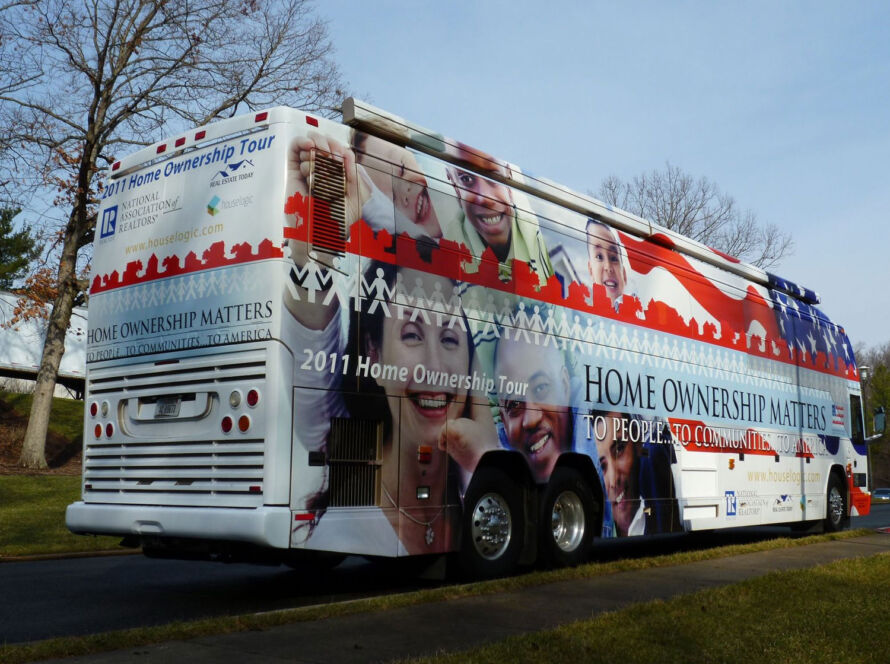
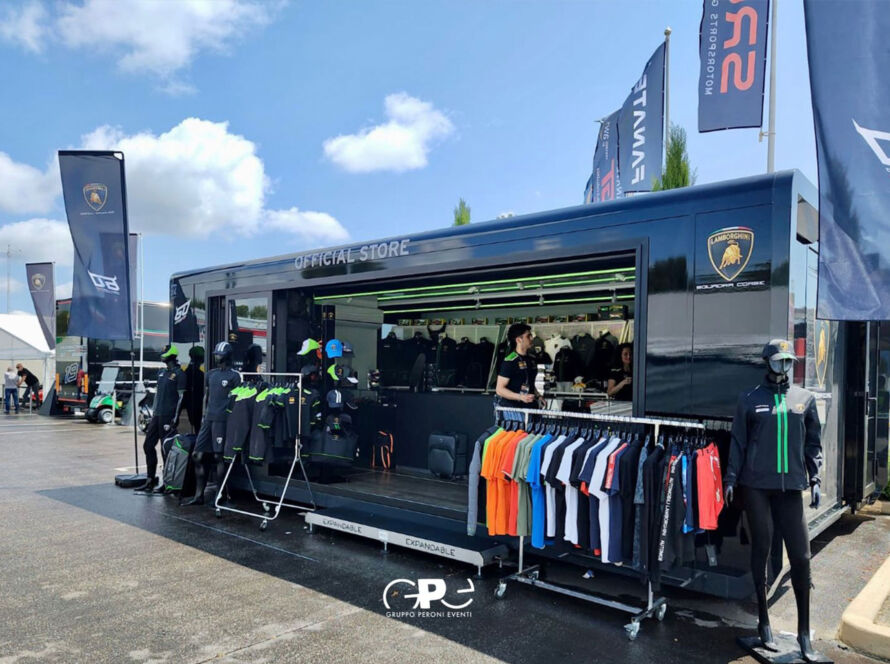
The kiosk in the mall. The table at the farmers market. The borrowed corner of someone else’s store. These are fine. They work. But they’re not exactly the kind of thing people pull out their phones to capture.
A mobile pop-up shop built around a branded vehicle is a different story. It moves when you need it to. It shows up at the right place at the right time. And when it’s done well, it doesn’t just sell, but it creates a moment people remember and talk about.
Not sure where to start? We’ve got you covered. Below, we’ll explore 8 fantastic pop-up shop ideas to get your brand on the move.
Why Mobile Changes the Pop-Up Game
Traditional pop-up shops are still location-dependent. You find a space, you set up, and you hope enough of the right people walk by. Mobile pop-ups change that equation. You go to where your customers already are (festivals, neighborhoods, events, retail parking lots), and you bring the experience with you.
The vehicle is the advantage. A wrapped coach bus, a branded event trailer, or a custom sprinter advertises your pop-up from a distance, draws a crowd by existing, and signals that whatever’s happening inside is worth stopping for.
That’s not something a folding table at a market can do.
8 Mobile Pop-Up Shop Ideas for Your Next Campaign
Not every idea will fit every brand. But one of these will. Find yours and run with it. Some of these are built for volume. Some are built for intimacy. All of them beat a tent.
1. Traveling Retail Store
Turn a vehicle into a fully functional retail environment and take it city to city. Custom interior shelving, branded fixtures, point-of-sale setup, the works. The exterior wrap does the marketing. The interior closes the sale.
This works well for brands testing new markets before committing to permanent retail. Instead of signing a lease, you do a three-city tour, measure sales velocity in each market, and make decisions based on data. Coach buses and event trailers are the go-to formats here with enough interior space to merchandise properly and move volume.
2. Limited-Drop Launch
Scarcity is a powerful thing. A product available only at specific tour stops, for a limited time, creates urgency that standard retail launches rarely match. People show up because they know if they miss it, it’s gone.
Fashion, sneaker, and lifestyle brands use this format with awesome results. The mobile element adds another layer: following the tour, tracking the next stop, posting about the drop. The vehicle becomes part of the story instead of just the delivery mechanism.
3. Try-Before-You-Buy Showroom
Some products need to be experienced before someone will buy them. Furniture, tech, skincare, and outdoor gear are categories where customers have questions that advertising can’t answer. A mobile showroom puts the product in front of them in conditions you control.
Build out the interior of a coach bus or double decker as a curated display environment. Staff it with people who know the product. Let customers try, test, and ask questions without the pressure of a retail floor. The brands that do this well outperform both e-commerce and traditional retail because the interaction is longer and more personal.
4. Seasonal Market Takeover
Farmers markets, holiday markets, and summer street fairs are events that draw engaged, browse-ready consumers. Show up with a vehicle instead of a tent and you’re already the most interesting thing in the market.
The seasonal angle also gives you a natural content hook. Summer tour, holiday pop-up, and back-to-school drops each have a built-in narrative that make it easier to promote before you arrive and recap after you leave.
5. Co-Brand Pop-Up
Two brands. One vehicle. Shared costs, expanded audience, and a concept that’s more interesting than either brand would create alone.
- Fitness brand and a nutrition brand
- Coffee company and a bookshop
- Skincare line and a wellness brand
The combinations that work are the ones where both audiences genuinely overlap.
Co-brand pop-ups tend to generate more organic content than solo activations because they feel more curated and surprising. They also cut the operational cost roughly in half, which makes the mobile format more accessible for brands that wouldn’t otherwise have the budget.
6. Neighborhood Drop
Instead of a major event or festival, you park in a specific neighborhood and make it feel like a local moment. This is all about the neighborhood. A brand that understands its target consumer well enough to know exactly where they live, eat, and spend weekends can use a neighborhood drop to make the interaction feel downright organic.
This format works well for food and beverage, beauty, and lifestyle brands. A sprinter van, thoughtfully positioned in the right block on a Saturday morning, can generate the kind of word-of-mouth that a booth at a festival never does.
7. Event Anchor
Instead of being a vendor at an event, become the destination within it. A double decker or full-size coach bus parked at a high-traffic location inside a festival, sporting event, or conference gives you a physical anchor point that other brand activations can’t replicate.
Use the vehicle as your base:
- Sampling on the lower level
- VIP access or media moments on the upper deck
- Branded photo moments on the exterior
Structure the experience so there’s always a reason to come back: a different giveaway each hour, a live demonstration on the hour, a DJ set in the afternoon. The goal is to be the place people keep returning to throughout the event.
8. Feedback Loop
Not every mobile pop-up has to be primarily about sales. Some of the most valuable ones are about awareness. Set up a sampling station where consumers try a product, answer a few questions, and receive something in return: a full-size product, a discount code, entry into a giveaway.
You ultimately get firsthand consumer reactions, honest feedback on taste, packaging, price perception, and competitive positioning. Across five markets and a few thousand interactions, that’s a research report you didn’t have to pay a firm to write. Pair it with meaningful sampling volume and the campaign pays for itself twice.
How to Pick the Right Vehicle for Your Pop-Up Shop
The idea and the vehicle need to fit each other. A few quick guidelines:
- Sprinter van: Tight spaces, intimate activations, one-on-one interactions. Best for neighborhood drops, co-brand concepts, and beauty or tech demos where depth of engagement matters more than volume.
- Event trailer: High-volume, open-format sampling and retail. Best for farmers markets, street fairs, and seasonal activations where crowd flow is the priority.
- Coach bus: Immersive brand environments with room for multiple zones. Best for showrooms, traveling retail stores, and multi-stop tours where the interior experience is central to the concept.
- Double decker: Maximum presence and spectacle. Best for event anchors, limited-drop launches, and co-brand pop-ups where being impossible to miss is the whole strategy.
Take Your Pop-Up Shop Idea on the Road
Creative Coach Solutions builds and operates branded vehicles for mobile pop-up shops, sampling tours, and experiential campaigns nationwide. We handle the vehicle, the wrap, the logistics, and the staffing, so you show up ready to sell.
Get a quote, and let’s build your dream tour.
Frequently Asked Questions
What is a mobile pop-up shop?
A mobile pop-up shop is a temporary retail or brand experience built around a vehicle that travels to different locations instead of operating from a fixed space. Brands use them for product launches, sampling campaigns, seasonal retail, and market testing.
What vehicle works best for a mobile pop-up shop?
It depends on your concept. Sprinter vans work well for intimate, one-on-one formats. Event trailers handle high-volume retail and sampling. Coach buses give you interior space for a full brand environment. Double deckers add spectacle and presence for large-scale events. Match the vehicle to the experience you want to create.
What brands use mobile pop-up shops?
Fashion, beauty, food and beverage, tech, and consumer goods brands all use mobile pop-ups regularly. H&M, Red Bull, Glossier, and countless CPG brands have run notable mobile pop-up campaigns. The format works across categories, but what matters is matching the concept to the brand and the audience.
How do I promote a mobile pop-up shop?
Build the tour into your content calendar before it launches. Announce stops in advance on social, partner with local creators in each market, and create shareable moments at the activation itself. The vehicle’s visual presence does a lot of the work on the ground. Pre-event buzz and post-event recap content extend the campaign’s reach well beyond the people who show up in person.