Getting product into someone’s hands is one of the oldest tricks in marketing. It also happens to be one of the most effective. Studies consistently show that free samples drive purchase rates between 25% and 30%, and sometimes higher for food and beverage categories where trial is the biggest purchase barrier.
But handing out samples and running a sampling campaign are two different things. One is a tactic. The other is a strategy.
And if you’ve invested in a mobile tour (branded vehicle, trained staff, multiple markets) you need the whole strategy and not just the tactic.
Why Mobile Sampling Works (and When It Doesn’t)
Mobile sampling works because it removes the two biggest barriers to first purchase:
- Uncertainty
- Inconvenience
When someone can try your product right now, for free, in a context where they’re already relaxed and open, you’ve eliminated both.
The math makes sense, too. A branded vehicle hitting five markets over three weeks, distributing 500 samples a day, puts your product in 10,000 hands before the campaign ends.
No paid media buy works that fast at that level of personal engagement.
Where it breaks down is when the sampling experience is generic. A folding table, a cardboard box of product, and a bored rep who’s been standing for six hours…yeah, that’s not a brand experience. That’s a grocery store demo.
Mobile sampling earns its budget when the environment, the staff, and the interaction all feel intentional.
Mobile sampling works best for products that are genuinely better experienced than described. Food and beverage are the obvious categories. Beauty, personal care, and consumer tech also work well. If your product’s value prop lives mostly on paper, sampling alone won’t close the gap.
How to Pick the Right Markets for Your Product Sampling
Market selection is where most brands either win or waste money. The instinct is to go where the most people are. That’s not wrong, but it’s missing something.
Think about three variables together.
- Concentration of your target consumer. Where does your buyer actually spend time? Not where the most people are but where the most of your people are. A fitness brand sampling at yoga studios and running events is going to outperform the same brand sampling at a generic street fair, even if the street fair has ten times the foot traffic.
- Retail proximity. The goal of sampling isn’t just trial, though. Remember, it’s ultimately about conversion to purchase. If someone tries your product and loves it, you want the path to buying it to be short. Activating near retail locations where your product is stocked dramatically increases post-sample purchase rates. It’s not a coincidence that CPG brands time sampling tours to coincide with new retail distribution in each market.
- Event calendars. Festivals, farmers markets, trade shows, sporting events, neighborhood fairs — these are high-density moments where your target consumer is already in the right mindset. Plan your tour stops around event calendars. A brand hitting Austin during SXSW is playing a different game than one showing up on a random Tuesday.
Map all three variables before you finalize your route. The sweet spot is where they overlap.
How to Choose the Right Vehicle for Your Product
The vehicle is more than just logistics. It shapes the entire sampling experience, and different products need different setups.
| Vehicle | Best product categories | Interaction style | Key advantage | Best environments |
| Sprinter Van | Beauty, tech, personal care | Intimate, one-on-one | Agile — parks almost anywhere, fast setup | Urban streets, corporate campuses, boutique events |
| Coach Bus | Luxury goods, tech, beauty | Immersive, multi-zone | Full interior build-out for sampling, education, and lead capture | Trade shows, corporate events, flagship market stops |
| Event Trailer | Food & beverage, CPG, beauty | High-volume, open-flow | Open side panel creates a natural counter — built for crowd flow | Festivals, farmers markets, street fairs, retail parking lots |
| Double Decker | Food & beverage, CPG, lifestyle brands | Multi-level — mass sampling below, VIP above | Sheer presence draws a crowd before a single sample is offered | Major festivals, large outdoor events, high-foot-traffic urban locations |
Sprinter Vans
Work well for tight spaces and intimate interactions. They’re maneuverable, easy to park almost anywhere, and faster to deploy than larger formats. For beauty brands doing personalized skin consultations or tech brands running one-on-one demos, the sprinter’s scale is an asset because it creates a closer, more curated experience.
Coach Buses
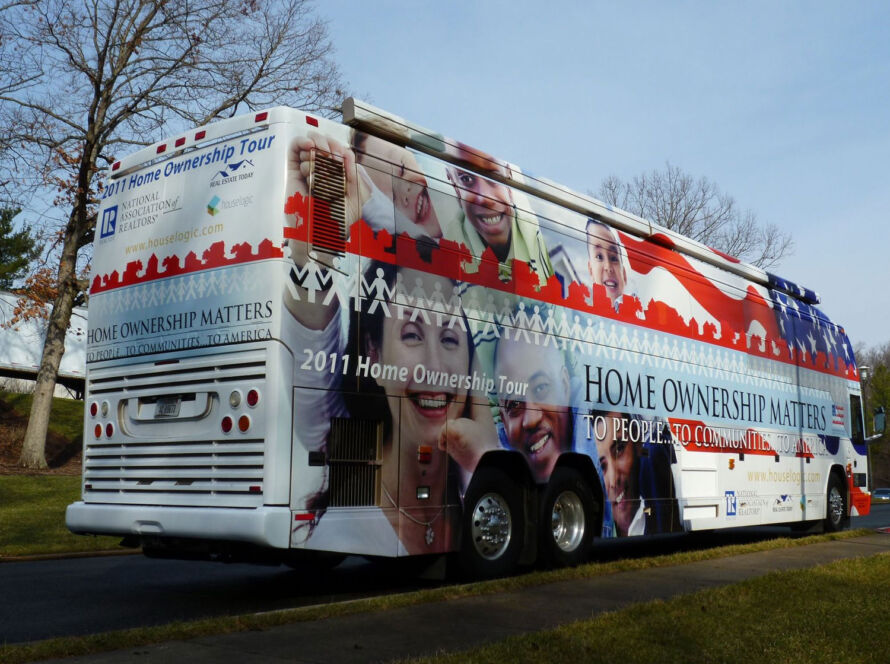
Give you interior space to build out a full brand environment. Separate zones for sampling, product education, and lead capture. Comfortable seating. Climate control. For premium brands where the environment needs to reflect the product’s positioning, a coach interior done well feels less like an activation and more like a flagship store that happens to travel.
Event Trailers
Are the workhorses of product sampling. Open the side panel and you’ve got a natural counter and display surface. They’re highly customizable, visible from a distance, and purpose-built for high-volume interactions. Food and beverage brands gravitate toward trailers because the open format handles crowd flow better than an enclosed space.
Double Deckers
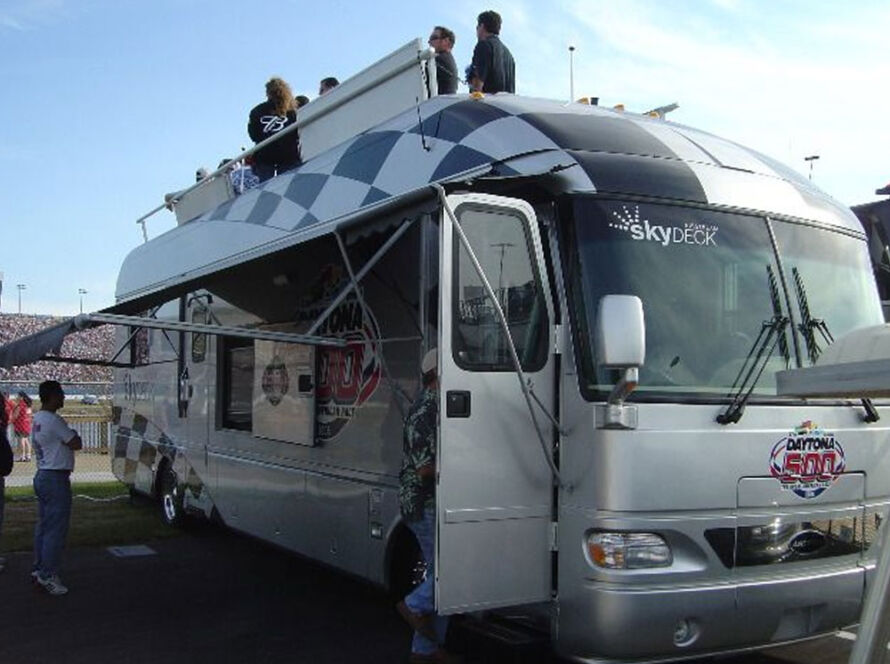
Add an element that other vehicles can’t touch: spectacle. The sheer presence of a double decker in a festival field draws a crowd before you’ve offered a single sample. Use the upper deck for VIP or media moments and the lower level for your sampling operation. If brand awareness is as important as trial volume, the double decker earns its premium.
Match the vehicle to your product’s needs, your target environment, and the experience you want to create.
Sampling Best Practices That Drive Conversion
Getting people to take a sample is easy. Turning that sample into a sale requires thinking through the interaction from start to finish.
- Lead with a question, not a product. The instinct is to extend the sample the moment someone makes eye contact. Resist it. A quick, genuine question first creates a conversation instead of a transaction. Conversations convert better than handoffs.
- Control the tasting or trial environment. For food and beverage, timing and preparation matter more than most brands realize. A warm sample of something meant to be served cold is a different product. A stale sample of something that’s supposed to be fresh does active damage. Train your staff on preparation standards and enforce them.
- Give people something to do next. After the sample, what happens? Build a clear next step into every interaction: a QR code linking to a store locator, a sign-up for a discount on first purchase, a quick feedback survey, a raffle entry. The sample opens the door, but the next step determines whether anyone walks through it.
- Create a reason to share. Social content from sampling tours is free media. Make the vehicle, the packaging, and the interaction photogenic enough that people want to post it. A custom hashtag, a branded backdrop, or an unexpected detail people haven’t seen before because any of these can turn a sample recipient into a content creator for your campaign.
5 Mistakes That Kill Good Sampling Campaigns
Worth knowing before you hit the road.
- Sampling to the wrong people. Volume feels good. Targeted volume drives results. If your ambassadors are handing product to anyone who makes eye contact instead of identifying your actual target consumer, your conversion numbers will tell the story.
- Ignoring preparation standards. Temperature, freshness, and presentation aren’t small details for food and beverage. They’re the product. A sample that doesn’t represent your product at its best is worse than no sample.
- No clear next step. If someone tries your product, loves it, and then has no obvious path to purchase, you’ve created a fan you can’t find again. Every interaction needs a defined next action.
- Understaffing. A long line with no one to manage it, or a crowd that gets three seconds of interaction because the team is overwhelmed are momentum killers. Better to staff up and have a quieter day than to be short-handed on your biggest stop.
- Skipping the debrief. The intel your staff collects in the field is genuinely valuable. Consumer reactions, competitive mentions, what’s resonating and what’s not — capture it after every stop. A five-minute debrief per day can reshape the back half of your tour.
Take Your Product on the Road
Creative Coach Solutions provides the vehicles, the wraps, the logistics, and the staffing for mobile sampling tours nationwide. Whether you’re launching a new product in five cities or running a seasonal sampling push across twenty stops, we build the tour around your goals and handle the execution so your team can focus on the brand experience.
Get a quote and let’s map out your tour.
Frequently Asked Questions
What is a mobile product sampling tour?
A mobile sampling tour is a brand marketing campaign where a custom-wrapped vehicle travels to multiple markets to put product samples directly into the hands of target consumers. The vehicle serves as the physical base for the sampling operation. It provides the branded environment, the staffing hub, and the logistical infrastructure for the campaign.
What products work best for mobile sampling?
Products where trial removes the biggest barrier to purchase perform best. Food and beverage, beauty and personal care, consumer tech, and household products all work well. The common thread is that trying the product answers a question that advertising alone can’t.
How far in advance do I need to plan a mobile sampling tour?
For a tour involving a custom vehicle wrap and multi-city logistics, 60 to 90 days is a reasonable planning window. Tighter timelines are possible with a simpler setup, but the more complex the campaign, the earlier you want to start the conversation with your vehicle partner.