Guerrilla marketing has one job: earn attention you didn’t pay for.
No media buy, celebrity endorsements, or guaranteed reach. Just a sharp idea executed in the right place at the right time, and if it lands, the audience does the distribution for you.
It’s a risk, but the reward is well worth the investment (if it works).
Some of the most memorable campaigns in brand history cost almost nothing. Some cost a lot but made the news cycle work as a free amplifier.
All of them had one thing in common: they made people stop, stare, and tell someone else.
Not every guerrilla marketing tactic hits the mark, but when they do…they really do. And those are the guerrilla marketing examples we’re exploring below.
21 Bold Guerrilla Marketing Examples
There’s no single playbook for guerrilla marketing. Different tactics suit different brands, goals, and environments. The examples below are organized by approach. Pick the category that fits your situation and study what made it work.
Outdoor & Ambient
Public spaces are everywhere. Most brands walk right past them. The ones below turned streets, bus stops, and building walls into their creative canvas and paid little-to-nothing for the real estate.
1. McDonald’s Fries Crosswalk
McDonald’s painted a crosswalk in the shape of a fries carton with the yellow stripes serving as the fries themselves. No signage needed. People got it immediately and photographed it on their own. The brand didn’t interrupt anyone’s day. Nope, it added something worth noticing to it. That’s the whole game.
2. KitKat Bench
KitKat replaced a standard park bench with one shaped and branded like a KitKat bar, positioned next to the tagline “Have a Break.” A product that exists entirely around the concept of taking a break, made into the thing you sit on when you take one. The idea and the execution are the same thing. That’s rare.
3. Frontline Flea Billboard
Frontline covered the entire floor of a multi-story building’s glass atrium with a giant image of a dog scratching itself. From the upper floors, the people walking across the ground level looked exactly like fleas on the dog’s back. Nobody walking through the atrium knew they were part of the ad. Everyone looking down did.
4. IKEA Bus Shelter
IKEA furnished a Toronto bus stop with actual IKEA products: sofa, lamp, rug, curtains. Functional, yes. Disruptive, you bet. It made a mundane, often miserable experience feel oddly comfortable, and it showed the product’s value better than any catalog photo could. People waited longer for the bus than they needed to.
5. Jeep Building Climber
Jeep placed a vinyl decal of one of their vehicles on the corner of a building, positioned to look like it was driving straight up the wall. No copy. No headline. The image did everything. It communicated off-road capability in a completely unexpected context. Passersby stopped and pointed. That’s the metric.
Stunt & Spectacle
Some campaigns earn attention by going somewhere no brand has gone before (literally or figuratively). These are the go-big plays. High risk, enormous reward when they land.
6. Red Bull Stratos
Red Bull sent Felix Baumgartner to the edge of space and livestreamed his freefall back to earth. Eight million people watched live on YouTube (a record at the time). The brand never mentioned its product once during the broadcast. It didn’t have to. The event was the brand. Red Bull doesn’t sell energy drinks. It sells the idea that humans can do impossible things.
7. TNT’s “Push to Add Drama” Button
TNT placed a large red button in the middle of a quiet Belgian town square with a sign that read “Push to Add Drama.” When someone pushed it, an elaborate live-action sequence erupted: motorcycles, ambulances, a fistfight, a woman in a negligee. The whole thing was filmed and released online. Forty-eight million views. One button. Zero traditional media spend.
8. Pepsi Max Augmented Reality Bus Shelter
Pepsi Max replaced the back panel of a London bus shelter with a screen showing live footage of the street, then it layered in augmented reality sequences: alien invasions, giant robots, tigers escaping from the zoo. Commuters waiting for the bus had no idea what was real. The footage went viral before the campaign was even officially launched.
9. Dollar Shave Club Launch Video
Technically a video, but the execution was pure guerrilla: $4,500 to produce, shot in the warehouse, founder-led, irreverent, and designed to spread without a media budget behind it. It did. Twelve thousand orders in the first 48 hours. Unilever acquired the company six years later for $1 billion.
Mobile & Vehicle-Based
Branded vehicles have been a guerrilla marketing tool long before anyone called it that. Move the brand to where the people are, make the vehicle impossible to ignore, and let curiosity do the rest.
10. Red Bull Mini Cooper Fleet
Red Bull deployed a fleet of branded Mini Coopers (each with an oversized Red Bull can mounted on the roof) into cities across the world. Ambassadors drove them through high-foot-traffic areas and handed out samples. The vehicles were the advertisement. The sampling was the conversion. Simple format, massive scale, still running decades later.
11. Oscar Mayer Wienermobile
A 27-foot hot dog on wheels has been rolling across America since 1936. It parks. People gather. Media shows up without being called. The Wienermobile is proof that a sufficiently bold physical object can generate press, social content, and brand affinity indefinitely without a campaign budget attached to each appearance.
12. Patagonia Worn Wear Tour
Patagonia drove a biodiesel truck across the country offering free repairs on any Patagonia garment, no purchase necessary. The campaign reinforced their sustainability values in a way a press release never could. It also generated enormous organic coverage because the act itself was newsworthy. Doing the thing is better marketing than saying the thing.
13. BrewDog Pink IPA
BrewDog launched a pink beer called “Pink IPA” and sold it from a branded pink van at a lower price than their regular IPA: the discount equal to the gender pay gap. Provocative, specific, and impossible to ignore. The campaign drew criticism and coverage in equal measure. Both drove awareness. The brand understood that for a certain audience, taking a clear position is more valuable than being liked by everyone.
Interactive & Participatory
The best guerrilla campaigns make the audience part of the campaign. Participation creates memory. Memory creates loyalty.
14. Coca-Cola Happiness Machine
Coca-Cola placed a vending machine on a college campus that dispensed pizzas, flowers, sub sandwiches, and enough Cokes to share with everyone nearby. Hidden cameras captured the reactions. The footage became a viral video that has racked up tens of millions of views. The product was almost beside the point. The emotion was everything.
15. Volkswagen Piano Stairs
VW’s Fun Theory campaign turned a Stockholm subway staircase into a working piano. Each step triggered a different note when stepped on. The goal was to prove that making something fun changes behavior. It worked: 66% more people chose the stairs over the escalator that day. The campaign won a Grand Prix at Cannes.
16. Domino’s Paving for Pizza
Domino’s asked customers to nominate the worst roads in their city, then sent crews to fill potholes…and branded the repaired asphalt with the Domino’s logo. Ostensibly to protect pizzas in transit. The actual effect was national press coverage, social virality, and a campaign that made people actively want to engage with a pizza brand about infrastructure. Remarkable is the right word.
17. UNICEF Dirty Water Vending Machine
UNICEF placed a vending machine in New York City that sold bottles of “dirty water” labeled with diseases (cholera, typhoid, malaria) for $1 each. The message was brutal in its simplicity: this is what 768 million people drink every day. Passersby didn’t buy the water. They donated instead. The machine raised awareness and funds simultaneously by making an abstract global problem viscerally, uncomfortably real.
Earned Media & Culture Moments
Some campaigns generate so much organic conversation that the media covers them like news. That’s not luck. It’s engineering shareability from the start.
18. The Blair Witch Project
Before the film released, the production team plastered fake missing-person flyers, filed fake police reports, and built a website presenting the story as real. Audiences debated whether it was fiction or documentary. The controversy drove demand. The film cost $60,000 to make and grossed nearly $250 million globally. The marketing created more suspense than the movie did, and that was entirely the point.
19. Dove Real Beauty Sketches
A forensic sketch artist drew women twice: once based on their own self-description, once based on how a stranger described them. The sketches were side by side. The difference was stark. The video asked a simple question about self-perception and answered it without saying a word. Sixty-three million views in the first month. Dove didn’t create a campaign. They created a conversation that already mattered.
20. Aldi vs. Colin the Caterpillar
When Marks & Spencer sued Aldi over their Cuthbert the Caterpillar cake being too similar to M&S’s Colin the Caterpillar, Aldi’s social media team turned a lawsuit into a content series. Cuthbert “went to jail.” Fans rallied. Aldi gained more followers in a week than most brands gain in a year. The legal dispute became the campaign. Most brands would have gone quiet. Aldi went loud.
21. ALS Ice Bucket Challenge
It started organically: a dare between friends to either dump ice water on your head or donate to ALS research. Within eight weeks, 2.4 million videos had been posted to Facebook, 28 million people had participated, and the ALS Association had raised $115 million. No brand launched it. No agency created it. It spread because the mechanic was simple, social, and gave people a way to participate publicly. It remains the most successful grassroots fundraising campaign in history.
What Makes Guerrilla Marketing Work
Every example above shares a few qualities worth noting.
- The idea is the media. Great guerrilla marketing doesn’t need a distribution budget because the concept itself is what gets shared. If you have to explain why something is clever, it probably isn’t.
- It meets people where they are. Bus stops, subway stairs, town squares, college campuses. The campaign goes to the audience. It doesn’t wait for the audience to find it.
- It creates a physical or emotional reaction. Surprise, delight, confusion, laughter, discomfort. Passive content disappears. Content that makes people feel something gets shared.
- It connects (however obliquely) to what the brand stands for. Red Bull and impossible feats. Patagonia and sustainability. Dove and self-perception. The stunt isn’t separate from the brand. It is the brand.
That’s the standard. And it’s reachable for brands of any size, including the ones that take their message on the road.
Take Your Brand Out of the Ad Break and Into the Street
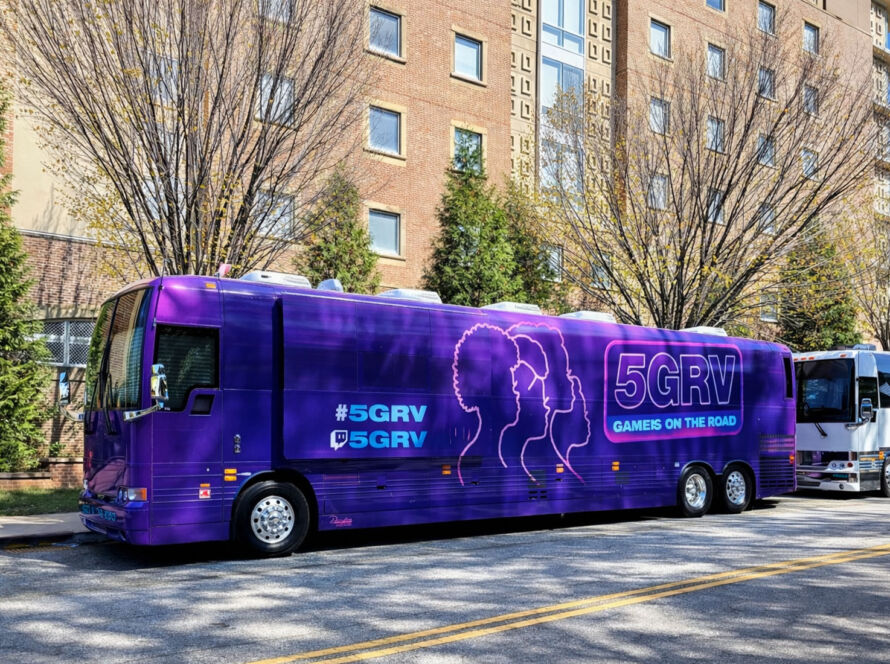
Creative Coach Solutions builds branded vehicles for mobile marketing campaigns that earn attention the same way the best guerrilla marketing does: by showing up somewhere unexpected, looking impossible to ignore, and giving people a reason to stop.
If you’re ready to get out of the feed and into the real world, let’s talk.