
Imagine. You’re at a crowded street festival. There’s a sea of white tents, folding tables, and brand reps in matching polos handing out stickers. Then, out of nowhere, a massive, fully wrapped double decker bus rolls in and parks itself right in the middle of everything.
Where do all eyes go?
Yeah. Exactly.
That’s the thing about double decker buses. They don’t compete for attention. They just take it. Two stories of bold branding, an open-top deck with 360-degree views, and enough presence to make every tent around it look like it’s trying too hard. For brands that want to show up and be seen, it’s hard to argue with using a double-decker bus.
Here’s everything you need to know about double decker bus marketing (including how to get your hands on one).
Why Use Double Decker Buses for Marketing
Most marketing vehicles work in one dimension. A sprinter van has a side. A trailer has a face. A booth has a table and some awkward eye contact.
A double decker gives you:
- Two full floors
- Multiple exterior branding surfaces
- Open-top deck
- Enough interior space to run a legit brand experience
All at the same time.
Height is an underrated superpower in experiential marketing. When your vehicle towers over everything else in the venue, you become the landmark. People use you to orient themselves. You become free real estate in your audience’s brain, and you didn’t even have to ask for it.
There’s also something emotionally loaded about a double decker. They’re iconic. They signal that something worth paying attention to is happening here. When one shows up wrapped in your brand, it creates an event within the event.
Scale drives impressions, and double deckers have scale in abundance.
6 Ways to Use Double Decker Buses
Really, you could use them in any way your imagination takes you, but if you need a starting point, here’s how brands are using them today:
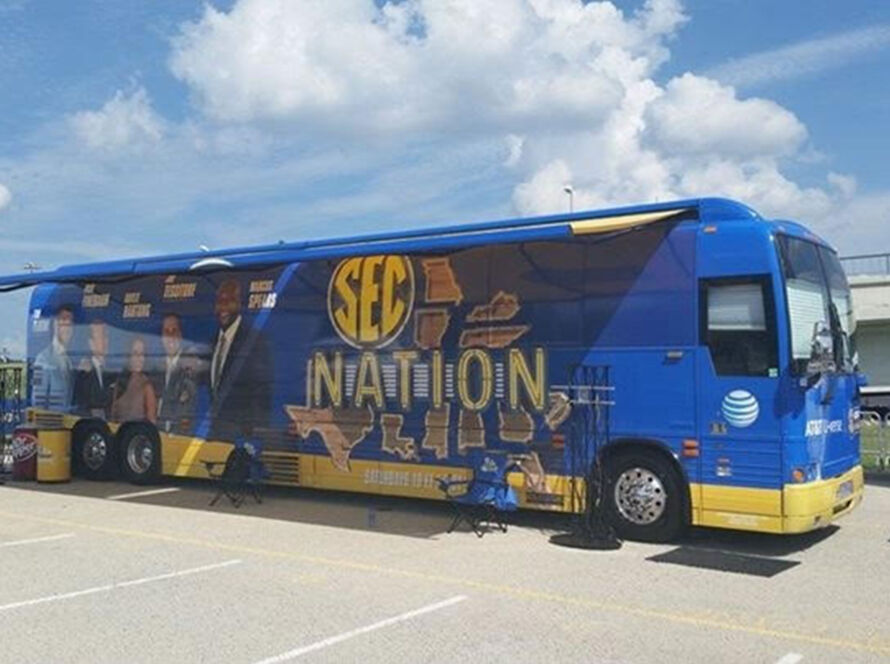
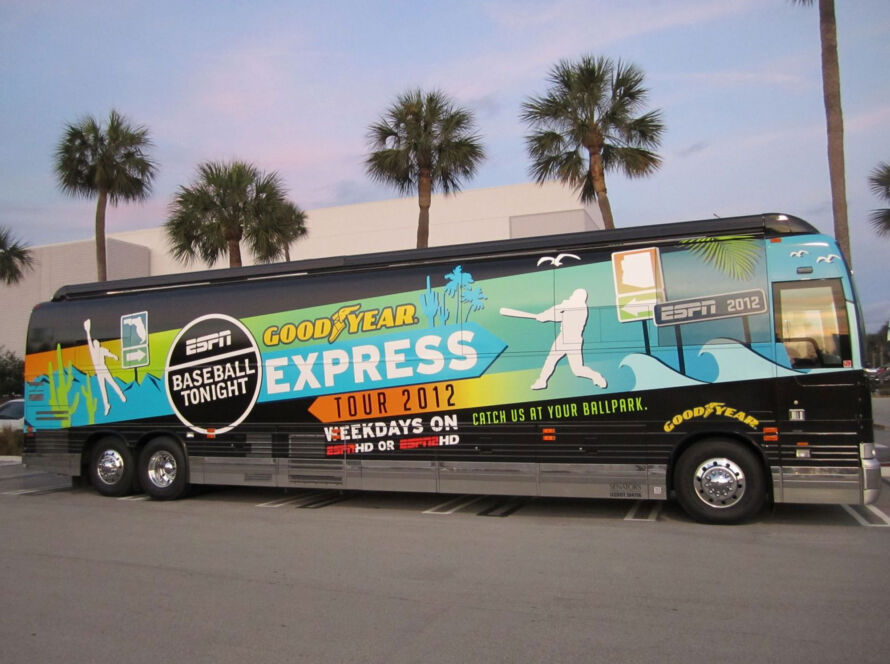
- Brand activation tours. This is the bread and butter. A fully wrapped double decker travels city to city (or parks itself at one high-traffic location) and becomes the physical home base for your consumer campaign. The exterior does the awareness work. The interior delivers the experience. Two jobs, one vehicle, zero tents required. You’re welcome.
- Festival and event marketing. At a festival, your competition is every food vendor, every side stage, every distraction in a 10-acre field. A double decker cuts through all of it. The open-top deck gives an instant VIP area. Instant photo moment. Instant reason for every person nearby to check it out.
- Product launches. Why wait for people to come to your launch event when you can bring the launch event to them? The interior handles demos and sampling. The exterior teases the product before you’ve said a word. The upper deck gives media and influencers a backdrop that looks nothing like any launch event they’ve been to before.
- Mobile showrooms. Some products need to be experienced before they’re bought. Automotive, tech, luxury goods — these categories benefit from environments that feel premium. A double decker interior can be built out as a fully branded showroom: custom lighting, modular displays, seating, AV. It’s a Soho pop-up that drives itself to your customer.
- VIP hospitality. For brands with premium positioning, the double decker becomes an exclusive space. Downstairs handles operations. Upstairs is the VIP section — elevated access that communicates prestige.
- B2B roadshows. Not every campaign is consumer-facing. Enterprise brands use double deckers to bring live demos and presentations to prospects at trade shows, corporate campuses, and industry conferences. Run a formal presentation on the lower level while the upper deck handles networking.
How Double Deckers Stack Up Against Other Vehicles
Picking a vehicle type is a real strategic decision. Here’s the head-to-head breakdown.
- Double decker vs. coach bus. Similar interior space, similar customization potential. The coach bus is lower-profile and easier to navigate in tight urban environments. The double decker wins on visibility and total activation square footage. Coach buses are the better call when flexibility matters more than impact. Double deckers are the better call when impact is the strategy.
- Double decker vs. sprinter van. Sprinters are the agile option — fast to deploy, easy to park, lower cost. They’re great for sampling campaigns and intimate activations. But they don’t make people stop mid-conversation to look. If your goal is maximum presence in a fixed location, the sprinter isn’t the answer.
- Double decker vs. event trailer. Trailers expand outward. Double deckers expand upward. Trailers win on ground-level footprint. Double deckers win when vertical visibility and interior experience matter more than how much space you’re taking up on the ground.
- Double decker vs. branded truck. Branded trucks are versatile, cost-effective, and dependable. They’re the reliable sedan of experiential marketing. But they don’t create events. A double decker does. If you need the vehicle itself to be the draw, the truck isn’t going to get you there.
What to Look for in a Double Decker Rental
Really, most of what comes up when you Google “double decker bus rental” is either sightseeing tour companies or party bus operators. Neither is set up for branded marketing campaigns. So when you’re evaluating a provider, here’s what matters.
- Wrap capabilities. Your vehicle has to be a canvas. Look for providers who can execute full vinyl wraps from design through installation or have vetted partners who do. A bare bus is just a bus. A wrapped bus is a campaign.
- Interior build-out. Generic interiors work for party rentals. They don’t work for brand experiences. Look for configurable interiors: modular furniture, branded fixtures, display areas, AV integration, custom lighting. If the provider can’t describe what they’ve built for previous clients, that’s a sign, and not a good one.
- Power output. Running screens, sound systems, lighting, and refrigeration requires serious power. A well-equipped double decker should have at least a 12kw onboard generator. Ask about shore power hookups as a backup.
- Open-top options. Convertible double deckers with a retractable roof dramatically expand what you can do with the upper deck. Fixed roofs are limiting. If the open-top configuration is important to your concept (and it usually should be), confirm this from the get-go.
- Logistics support. A vehicle without an experienced driver and a logistics plan is an expensive parking situation. Look for turnkey providers who handle transportation, placement, permitting, and on-site support. Your team should be running the activation instead of panicking about how to back a double decker into a festival entrance.
- Nationwide reach. Multi-city campaign? Confirm your provider can support it. Moving a double decker across state lines involves routing, permitting, and local relationships that experienced operators already have. Inexperienced ones are figuring it out alongside you.
How to Get the Bus Rolling
Before you call anyone, get clear on what you’re trying to do. Campaign goal, target cities, audience, duration — nail those down first. A clear brief gets you a useful quote. A vague one gets you a placeholder number and a calendar full of follow-up calls.
From there, share your concept with a provider and let them come back with real recommendations:
- Vehicle options
- Customization ideas
- Staffing considerations
- Timelines
- Realistic budget
If what they send you looks like a generic rate card with a PDF attachment, find someone else.
One thing most brands underestimate: time. Custom wraps take time. Permitting takes time. Staffing takes time. If your campaign kicks off in 60 days and you haven’t started the conversation yet, you’re already behind. Ninety days is the minimum runway for a fully wrapped double decker activation. More is always better.
As you lock in locations, don’t assume all stops are created equal. Every venue has its own vehicle access requirements, placement restrictions, and permit needs. A good provider navigates this for you.
Last thing, decide what success looks like before the campaign launches. Foot traffic, samples distributed, leads captured, social impressions, post-campaign sales lift. All of it is trackable. Build measurement into the plan from day one so when next year’s budget conversation rolls around, you’ve got something real to show for it.
Become the Attraction Nobody Can Miss
Creative Coach Solutions builds and operates experiential marketing vehicles with fully customizable double decker buses designed for brand activations, roadshows, product launches, and mobile tours. We handle everything: vehicle selection, custom wraps, staffing, logistics, and nationwide delivery.
You focus on the activation. We’ll make sure the vehicle shows up ready to work.
Get a quote and let’s build something people can’t stop talking about.
Frequently Asked Questions
What is double decker bus marketing?
It’s using a custom-wrapped, two-story bus as the centerpiece of a brand activation campaign. Brands use them for roadshows, product launches, festival activations, mobile showrooms, and VIP experiences, or anywhere high visibility and multi-level activation space give you an edge.
How is renting a double decker for marketing different from transit bus advertising?
Completely different thing. Transit advertising means buying ad space on a city bus running a fixed route. You don’t control the vehicle, the route, or the experience. Renting a double decker for marketing means the vehicle is entirely yours: wrapped in your brand, configured to your specs, deployed exactly where and when your campaign needs it.
What can you actually fit inside for an activation?
Quite a lot. Branded display areas, product sampling stations, lounge seating, AV screens, interactive displays, demo setups, staff workspace — spread across two levels. The upper deck can be an open-air VIP lounge, a photo moment, a presentation space, or all three at different points in the day.
How far in advance do I need to book?
90 days minimum for a campaign with a full custom wrap and staffing. Major events and peak seasons book out faster. If you’ve got a specific date on the calendar, the sooner you reach out the better.
Do I need special permits to use one at events?
Usually yes. Most cities and events require some combination of vehicle access permits, vendor approvals, and generator use clearances. A good turnkey provider handles all of this as part of the service, and it’s one of the biggest reasons to work with an experienced partner over sourcing a vehicle on your own.
1 Comment
Comments are closed.