How to choose an experiential marketing vehicle, in one sentence: work backward from the campaign brief, not forward from a fleet page.
Six variables do most of the deciding: who you need to reach, how long you need to hold their attention, whether the experience happens inside the vehicle or in front of it, how many markets you’ll cover, how much runway you have before launch, and what the budget will actually carry once fuel, drivers, and permits are counted. Answer those six honestly and the vehicle class usually picks itself.
We build and operate every class discussed below, from sprinter vans to full-size trailers, so we have no reason to steer you toward any one format. What follows is the framework we walk agency producers and experiential directors through when a brief lands on our desk, including the trade-offs each class asks you to accept.
If you’re still mapping how a mobile program works end to end, our mobile marketing tour explainer covers the full arc from concept to reporting; this post assumes you’re past that and choosing hardware.
Start With the Brief: Six Questions That Narrow the Field
Before you compare vehicles, run the brief through six filters. Each one eliminates classes rather than selecting them, which is faster and harder to argue with in a planning meeting.
- Audience and Setting: A downtown lunch crowd, a festival ground, and a dealer’s parking lot admit very different footprints before you’ve considered anything else. Match the vehicle to where your audience already gathers.
- Dwell Time: A ninety-second sampling interaction and a twenty-minute guided demo need different amounts of enclosed, climate-controlled space. Long dwell means interior square footage.
- Interior or Exterior Experience: If guests come aboard, you need standing height, climate control, and a traffic flow that doesn’t bottleneck. If the vehicle is a backdrop and serving point, you’re buying presence and wrap real estate instead.
- Market Count and Route: A single market forgives almost any choice. Eleven markets in six weeks punishes anything that’s hard to drive, park, or permit.
- Timeline: Rentals and retrofits deploy fastest. Full custom builds take weeks to months depending on scope, and that clock starts after design approval, not before.
- Budget: Count the whole program, not the vehicle: fuel, professional drivers, permits, insurance, and staffing all scale with vehicle size.
Hold your brief against each class below and notice which filters rule it in or out.
Sprinter Vans and Cargo Vans: Small Footprint, Fast Deployment
Sprinter activations are the access play. Vans fit metered street parking, tight urban cores, parking garages, and venues that would turn a coach away, and they deploy faster than anything else in the fleet, which matters when the campaign was approved late.
Operating costs run lowest of any class, no commercial driver’s license is required, and a multi-van approach can put your brand in three neighborhoods at once for less than one large vehicle costs to run. They also scale down gracefully: a one-day, one-market activation that would never justify a coach still pencils in a van.
The trade-offs are structural. There is no interior experience to speak of, so the activation happens on the sidewalk, exposed to weather. At a festival or stadium lot surrounded by larger builds, a van can disappear.
Choose this class when the brief says urban density, speed, tight budget, or swarm, and spend up when the brief says immersion or presence.
Step Vans, Food Trucks, and Glass Display Vehicles: Presence Without the Permit Fight
The mid-size classes earn their keep by being noticeable while staying drivable. Step vans and food trucks carry serious wrap real estate and support serving windows, sampling counters, and product displays, and they still park in most commercial zones without special staging. Food trucks bring built-in utility if the campaign involves anything edible or beverage-led.
Glass Display Vehicles are the specialist here. Transparency puts the product itself to work as the creative, with sightlines from every angle and a stage that photographs well from a phone, which is why the format shows up so often in social feeds.
The honest constraints: glass builds need attention to climate, product security, and staging, and they reward campaigns where a hero product carries the story. Limited interior space means the experience stays exterior, so weather needs a plan that isn’t canceling.
Choose the mid-size classes when you need to stop foot traffic and hand someone something, but the experience doesn’t need four walls around the guest.
School Buses and Double Deckers: Familiar Shapes and Big Sightlines
School bus conversions trade on familiarity. The shape is approachable, people are comfortable stepping aboard, and the platform is straightforward to build interactive displays and sampling areas into, which makes it a solid pick for activations that want an easy, welcoming entry point rather than pure spectacle.
Double Deck Mobile Experiences are the crowd-draw in this pair. A second level adds room for engagement, video walls, speaker systems, and rooftop features that read from across a festival ground, and the sightline math works in their favor at packed venues: a second deck stays visible over a crowd in a way no ground-level footprint can match.
That visibility is why the format anchors large-scale events and city-to-city tours built to command attention.
The trade-offs live in the routing. Height clearances rule out certain parking structures, underpasses, and streets, and dense urban routes take real advance planning. Boarding flow needs staffing to manage, and a two-level experience means more brand ambassadors per stop.
Choose these classes when an approachable footprint or big-venue visibility is the goal, and reach for a coach when you want that same crowd presence paired with a controlled, premium interior.
Coaches: When the Experience Lives Inside
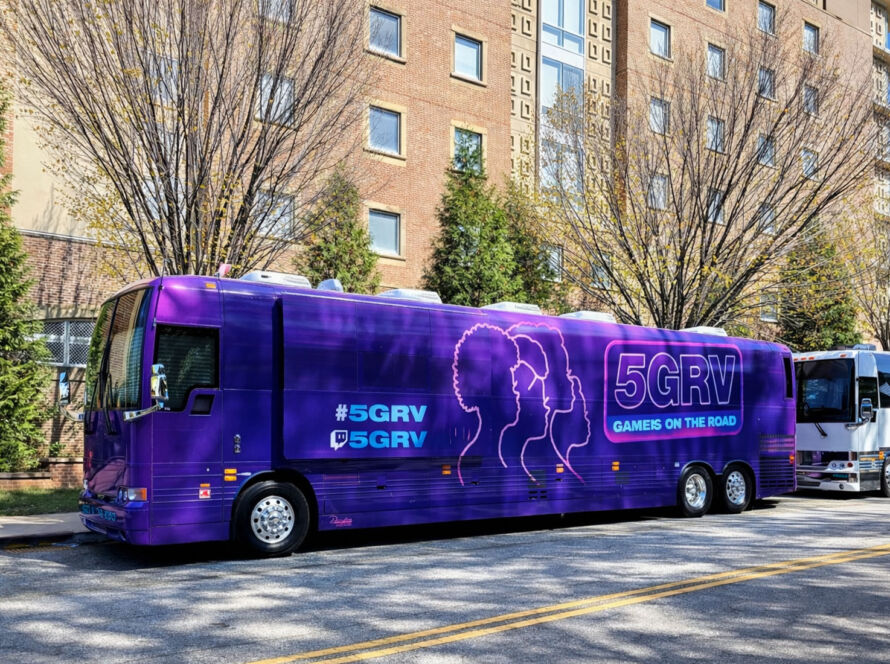
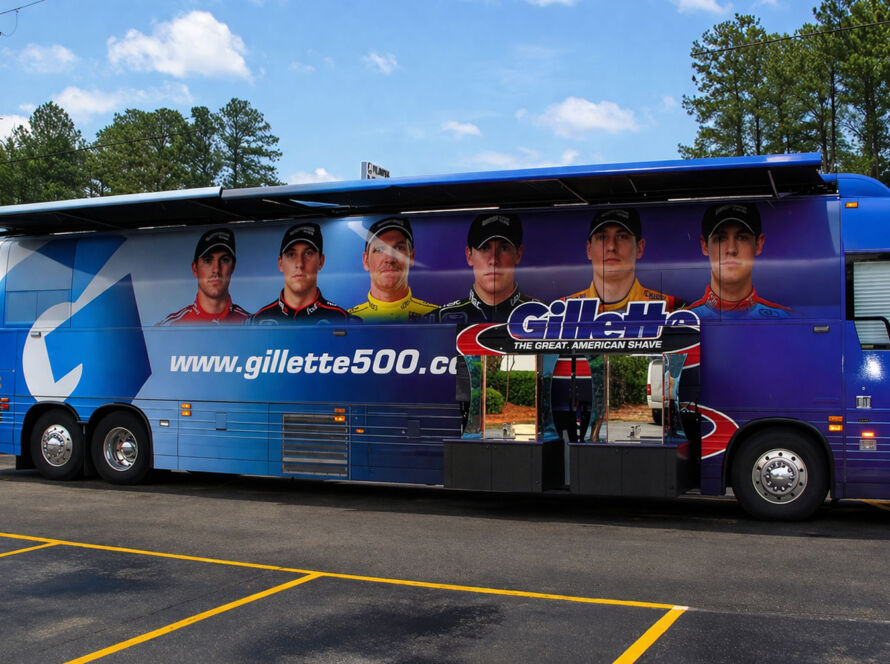
When the brief calls for a controlled interior, the answer is usually a coach. Prevost-based Mobile Experience Coaches and Luxury Mobile Showrooms deliver standing height, climate control, custom interior fabrication, on-board restrooms, and the premium finish that B2B demos, hospitality programs, and VIP experiences require.
This is the class where a guided twenty-minute product demonstration happens the same way in Chicago as it does in Austin, because the environment travels with you.
Mobile Command & Operations Vehicles belong to the same family, carrying field-team infrastructure instead of guest experiences. Coach programs also anchor Roadshow & National Tour Programs, where one build works an entire season of markets and the per-market cost falls as the calendar fills.
The costs of that control are real: coaches carry the highest operating profile short of a tractor-trailer, need CDL (commercial driver’s license) drivers, want confirmed parking and power at every stop, and reward programs long enough to amortize the build.
Choose a coach when dwell time is long, the product demands demonstration, or the audience expects a premium environment.
Trailers: A Traveling Building, With the Logistics to Match
At the top of the spectrum, expandable trailers create multi-room brand environments, working showrooms, and event anchors that no other class matches for sheer interior capacity.
Expandable sides can more than double the deployed footprint, which is what turns a highway-legal trailer into a showroom with distinct rooms once it’s staged. If the brief describes something closer to a pop-up building than a vehicle, this is the class it’s describing.
Everything about a trailer program is a planning decision: CDL drivers, route and venue constraints at 53 feet, staging space, setup windows, and power requirements that need confirming market by market.
Choose a trailer when capacity is non-negotiable and your timeline and venues can support it, and choose something smaller when it isn’t.
How to Choose an Experiential Marketing Vehicle When Two Classes Still Fit
Most briefs end with two classes still standing, and the tie-breakers are practical.
Weigh the space first: what each venue actually gives you sets the field before anything else. Do you have room to stage and work a 53-foot trailer, a 45-foot bus, or do you need something smaller and more nimble? Answer that stop by stop and everything else narrows fast.
Weigh the route second: if more than a third of your stops are dense urban markets, the smaller class usually wins, because a vehicle you can’t park or permit in market seven is the wrong vehicle regardless of what it does in market one.
Weigh the demo third: if the product only persuades under controlled conditions, buy the interior and accept the logistics. Weigh the creative fourth, because wrap real estate changes by class and your key art may need the broad side of a coach rather than the panels of a van.
One more asymmetry worth naming before you commit: acquisition cost and operating cost don’t move together. A modest vehicle on a long route can out-spend a premium vehicle on a short one once fuel, drivers, and per-market permits are totaled, so price the program, not the platform.
That discipline is what separates a good vehicle choice from a merely defensible line item.
Then weigh reuse. A class that serves this campaign and next season’s program justifies more investment than a one-off. Finally, pressure-test the shortlist with an operator who runs both classes and will tell you directly which one your brief needs.
We do that consultation as a matter of course, and the producers who ask early consistently launch smoother than the ones who lock the vehicle before the route exists.
Key Takeaways
- The brief chooses the vehicle: audience, dwell time, interior versus exterior, market count, timeline, and budget eliminate classes faster than any spec sheet.
- Small formats buy access and speed, large formats buy capacity and presence, and the mid-size classes trade some of each.
- Route reality is part of the choice: a vehicle you can’t park or permit in a key market is the wrong vehicle, whatever it does elsewhere.
- When two classes fit, decide on venue space first, then route mix, demo requirements, wrap real estate, and reuse plans, then pressure-test with an operator who runs both.
Related Reading & References
- Our Vehicle Fleet
- Custom Vehicle Wrap Design
- Mobile Brand Activation Strategies
- CCS Frequently Asked Questions
See the Fleet in Action → — explore every class in this framework, from sprinter vans to full-size coaches.
Browse the Gallery → — see how each format looks built, wrapped, and working a market.
Start Planning Your Activation → — request a campaign quote and the CCS team will respond within 24 hours.