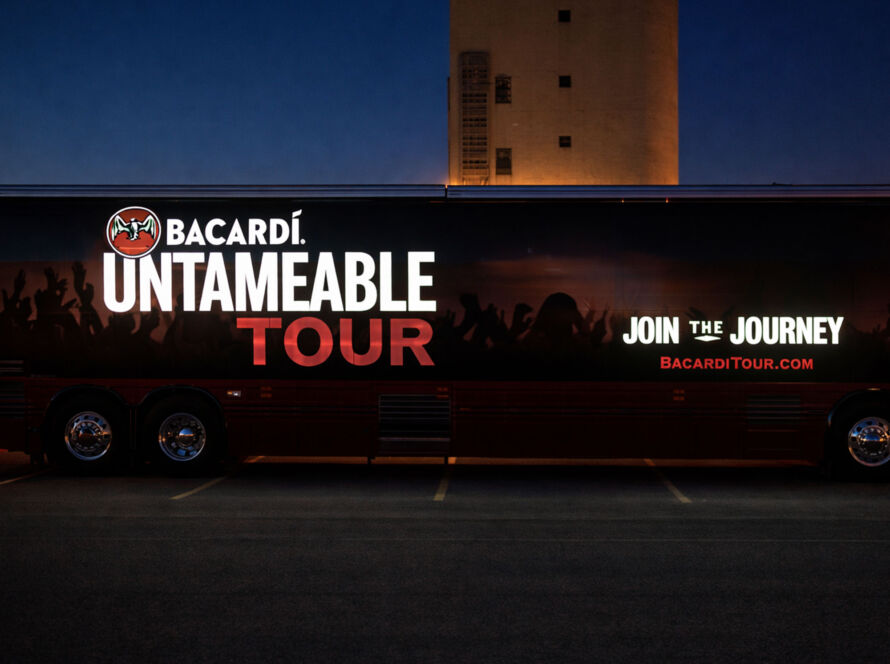
Book against the season, not the launch date. That’s the short answer, and the rest of this guide makes it concrete: a mobile tour planning timeline is a chain of dependent phases, and the way to know how far in advance to book is to start at launch day and walk that chain backward until you find the phase that has to move first.
The pressure on your calendar rarely comes from your side of the table. It comes from shared capacity. Vehicles, fabrication bays, wrap installers, and municipal permit offices serve every brand chasing the same season, and the queue forms months before the first festival gate opens or the first trade-show floor fills. What follows is the sequence in reverse, with an honest account of which phases compress when you push and which never do.
Start at Launch Day and Walk the Mobile Tour Planning Timeline Backward
A forward plan flatters your launch date. You sign, the phases line up neatly on a slide, and every estimate quietly assumes nothing waits on anything else. A backward plan removes the flattery.
Launch day is fixed, so every phase inherits its deadline from the one after it, and the collisions show up on paper instead of in the third week of fabrication.
The dependencies run in a specific order. Staff cannot rehearse an experience that is not built. A wrap cannot be measured, printed, or installed until the exact vehicle is confirmed. Permits cannot be filed until the route and venues are locked. And none of it starts until the platform itself is sourced and under contract. That chain, not ambition, is your real campaign planning timeline.
One more thing the backward plan forces: a single owner for the master schedule. On programs that slip, the vehicle, the wrap, the permits, and the staffing were usually all on time by their own private calendars. Nobody owned the handoffs between them, and the handoffs are where the weeks disappear.
Closest to Launch: Staffing, Advance Work, and the Shakedown Run
The phases nearest launch look small and rarely are. Brand ambassadors need to be hired, trained on the product, and rehearsed inside the actual footprint rather than a conference room, and if the program captures data, the crew needs live reps on the actual capture tools before a real visitor is standing in front of them. A tour manager needs to advance every stop, confirming load-in windows, parking, power, and local contacts before the vehicle rolls. A disciplined program also budgets a shakedown: a full dry run of the vehicle, its systems, and the experience itself, so the first paying market is not the test market.
These phases can compress, which is exactly what makes them dangerous. Training gets shortened, advance work gets done from a desk, and the shakedown gets cut to protect the date. The tour still launches. It just launches with its rehearsal scheduled in front of a live audience.
Routing, Venues, and Permits: The Phase You Cannot Pay to Speed Up
Municipal permitting is the part of the brand tour lead time that money does not move. Every city treats a branded vehicle differently. Some require a special event permit, some a parking or right-of-way permit, some both, and review periods are set by ordinance and office staffing rather than by your launch date. Filing early is the only reliable lever, and filing early requires a confirmed route, which is why routing sits deeper in the calendar than most first-time producers expect.
Venue agreements carry their own clocks. Festivals assign sponsor placements on their schedule, retail partners route approvals through corporate, and private venues want certificates of insurance before they confirm anything. Every route is really a stack of agreements, each with its own review cycle, and the slowest one sets the pace.
Wrap Design and Production: Fast on Its Own, Slow When It Waits Upstream
Wrap production looks quick in isolation: design, approval, print, install. What stretches it is everything upstream. A wrap is templated to the exact vehicle, down to panel seams, rivets, and window placement, so final design cannot start until sourcing is done. The approval cycle, meanwhile, belongs to you. In our experience the artwork spends more time in a brand review inbox than it does on the printer, so if your organization needs three rounds and a legal pass, put that in the plan honestly instead of discovering it in production.
Fabrication and Sourcing: The Long Pole in the Experiential Vehicle Build Time
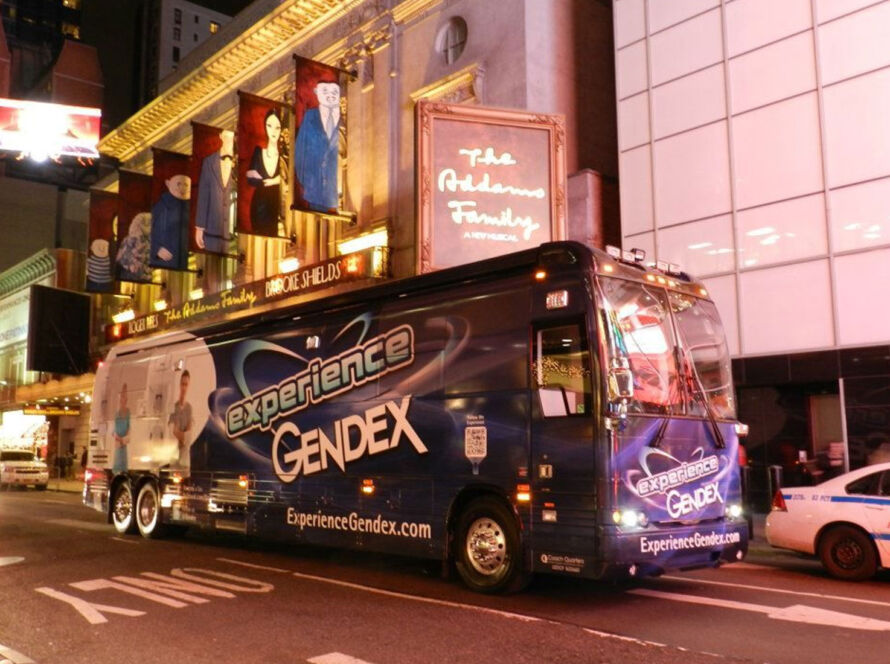
Everything above rides on the platform, and the platform is the least compressible item on the list. A rented vehicle in a proven format moves fastest. A retrofit of an existing platform takes longer. A ground-up custom build, with interior fabrication, power, climate control, and working product environments, is a construction project on a chassis, and construction does not respond to urgency the way a media plan does. The Gendex program is the instructive example from our own portfolio: a Prevost XLII converted into a functioning dental imaging showroom, a build that went on to run 457 days on tour precisely because the fabrication underneath it was done right rather than fast.
The sourcing decision itself deserves respect in the schedule, because rent, retrofit, or build sets every clock downstream, and it cannot be made well in a rush. Contracting adds its own steps: scope, insurance, and operating responsibilities all get defined before a bay is reserved or a chassis is ordered. Teams tend to treat the contract as paperwork that happens while real work proceeds. On the calendar, it is the gate everything else waits behind.
[TK: CCS’s typical build, wrap, and booking lead-time ranges by vehicle class]
Treat those as planning ranges rather than guarantees, because scope, season, and the speed of your own approvals move every one of them.
Seasonal Pressure: The Season Sets the Booking Window, Not Your Launch Date
Two windows create most of the sourcing crunches we see. Summer festival season concentrates demand for high-visibility platforms into the same few months, and Q1 trade shows do the same for the coaches and trailers that become mobile showrooms. If your launch sits inside either window, you are not booking against your own calendar. You are booking against every other brand that wants the same vehicle class, the same fabrication capacity, and the same wrap installers in the same weeks.
The teams that get the platform they want share one habit: they commit while the season is still an idea. Summer programs are signed in winter, and Q1 trade-show programs are signed the previous summer. Late movers do not get a smaller version of their plan. They get whatever inventory is left, and the plan bends around it.
The shoulder seasons are the quiet advantage here. A program that can launch in spring or early fall competes with far less demand for vehicles, fabrication, and install capacity, which is worth raising internally when the launch date is a preference rather than a hard commitment tied to a product or sponsorship.
How to Pressure-Test a Target Launch Date
Take your launch date and subtract the chain, phase by phase, in this order.
- Shakedown, staffing, and training, working back from launch week.
- Permit filing and venue confirmation, working back from the review periods of your slowest city.
- Wrap design, approval rounds, print, and install, which cannot start until the vehicle is confirmed.
- Fabrication or retrofit, sized to the scope of the build.
- Sourcing and contract, the gate the whole chain waits behind.
If the start of that chain lands in the past, the date is already gone, and the useful conversation becomes which variable moves: the date, the vehicle class, or the scope of the build. Our producer’s framework for choosing an experiential marketing vehicle is the right companion read here, because the fastest way to rescue a launch date is usually a smarter platform decision, not a compressed build.
If the date is real and the season is close, start the sourcing conversation now and let the rest of the plan form around a confirmed platform. Bring us the launch date and we will walk the chain backward with you before you commit budget to it, which is how the programs that hold their dates tend to begin.
Key Takeaways
- A launch date is the end of a dependency chain: sourcing, fabrication, wrap, permits, staffing. Walk it backward before you commit to it publicly.
- Fabrication and municipal permitting are the two phases that never compress; staffing, training, and the shakedown compress, but at real cost.
- Wrap production is fast on its own; waiting on vehicle confirmation and your own approval rounds is what makes it slow.
- Summer festival season and Q1 trade shows create sourcing crunches, so book against the season, not the launch date.
Related Reading & References
- Choosing an experiential marketing vehicle
- Our vehicle fleet
- Gendex international tour
- CCS FAQ
See the Fleet in Action → Browse the vehicle classes these booking windows are built around.
See Our Work in Action → What a fabrication-first build delivers once it is on the road.
Start Planning Your Activation
Request a campaign quote and the CCS team will respond within 24 hours.